

Damp and wet rated ceiling fans
Bathrooms, porches, and patios need the right rating.
Disclosure: We may earn a commission if you buy through links on this page. It does not change what we recommend. Affiliate Disclosure
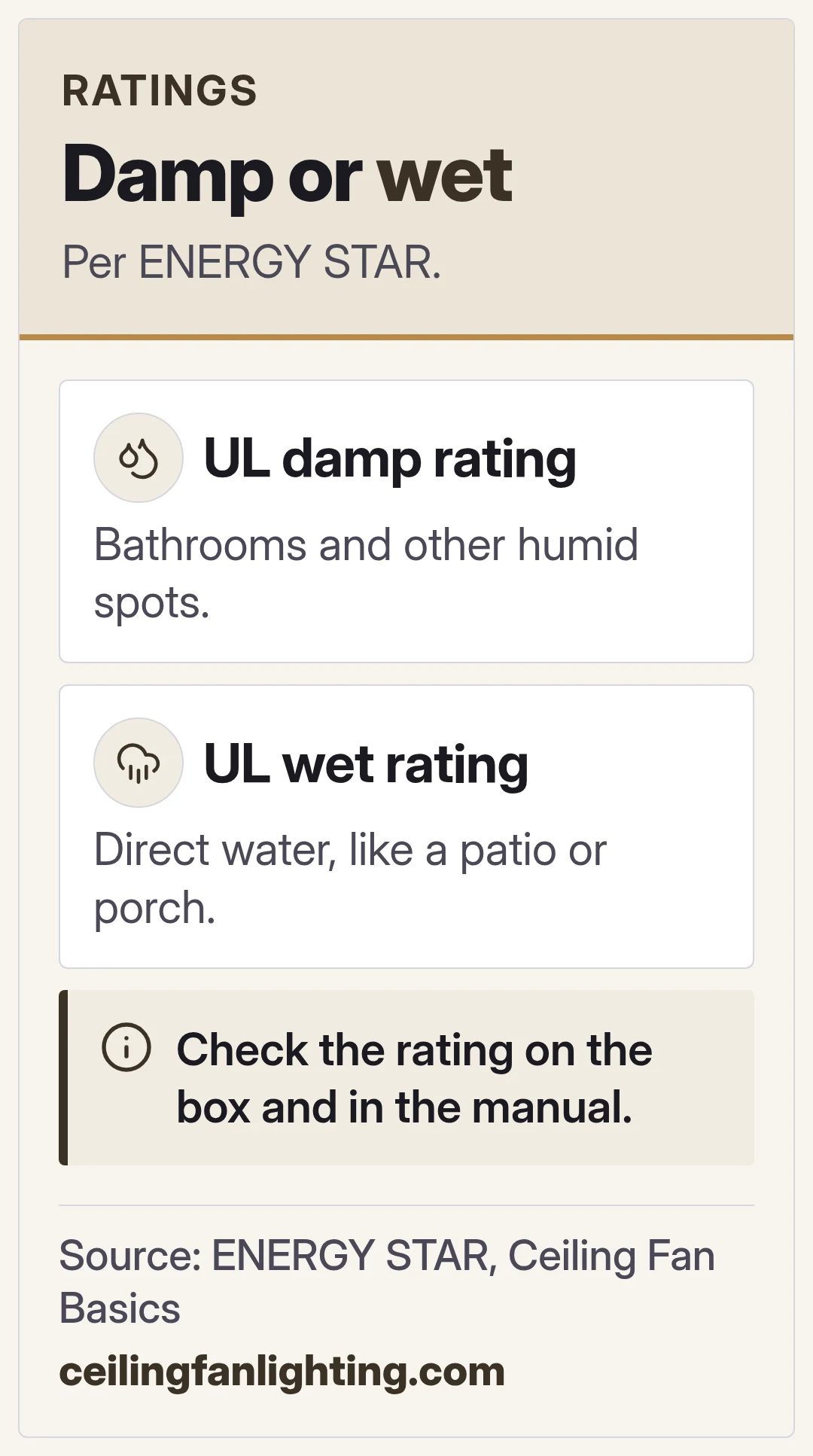
Damp rating
ENERGY STAR says to buy a fan UL listed with a "damp" rating for a bathroom or other humid location.
Wet rating
ENERGY STAR says fans that may come in direct contact with water, like on a patio or front porch, need a UL "wet" rating.
What the ratings mean
ENERGY STAR says these fans include features such as sealed or moisture-resistant motors, rust-resistant housings, stainless steel hardware, and all-weather blades. UL 507, the UL standard for electric fans, covers ceiling-suspended fans.
Wet areas and shock
NFPA says homes should have GFCIs in bathrooms and outdoor areas, among other places. Ask a licensed electrician about the circuit before a fan goes into a damp or wet spot.
FAQ
General information only. Ceiling fans and light fixtures are electrical equipment. Hire a licensed electrician for any installation, wiring, electrical box, switch, or light kit work, and follow the fan maker's manual and your local electrical code. Before cleaning, changing a bulb, or checking a fan, turn it off and let the blades stop and the bulbs cool; turn off power at the circuit breaker before any work near the fan's wiring. Use a stable ladder, and if you are not comfortable working overhead, call a pro. Never use a bulb above the maximum wattage marked on the fixture. If a fan or light flickers, buzzes, smells hot, or trips a breaker, stop using it and call a licensed electrician.

Next: before installation
Plan it, then hire a pro.
