
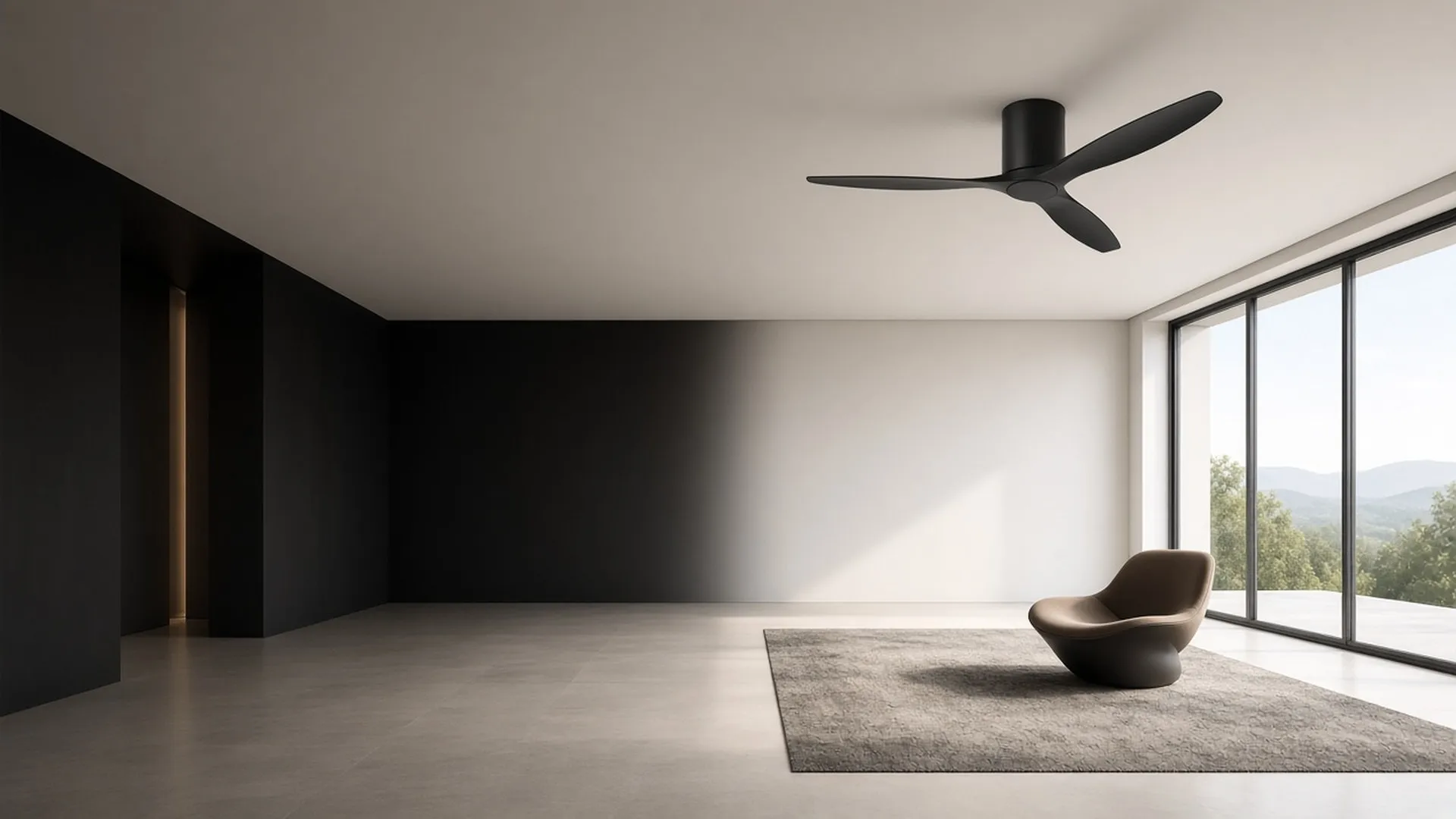
Ceiling fan installation: what to know
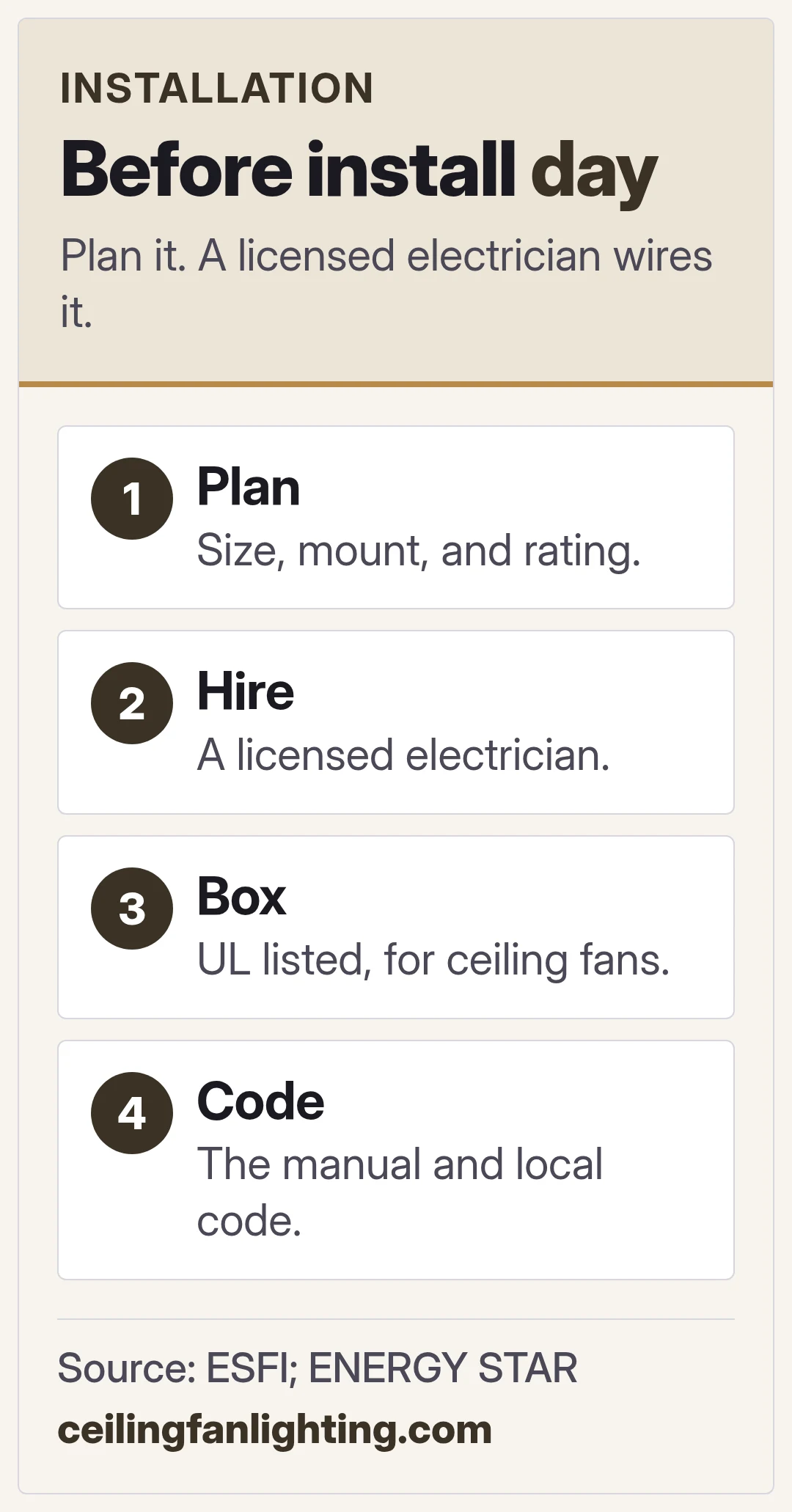
Plan the fan. Leave the wiring to a licensed electrician.
Disclosure: We may earn a commission if you buy through links on this page. It does not change what we recommend. Affiliate Disclosure
Why we do not give wiring steps
ESFI strongly recommends hiring a qualified, licensed electrician for any electrical work in your home. It says most homeowners do not have the training or experience to do home electrical work safely. We do not publish wiring instructions.
What to plan first
Choose the room, the fan size, the mount, and the rating before install day. Ceiling fan size guide
Replacing a light fixture
ENERGY STAR says that if you are replacing a ceiling fixture, you will most likely need to replace the electrical box. Fan-rated electrical boxes
What the manual says
ENERGY STAR says to read and understand the maker's instructions before installation. One maker's manual says all wiring must follow national and local electrical codes (ANSI/NFPA 70), says to use a qualified electrician if you are unfamiliar with wiring, and says to turn off the circuit breakers before installing or servicing the fan.
Choosing an electrician
ESFI says a qualified electrician is licensed, insured, and bonded in your state, up to date on your state's electrical code, and pulls required permits.
Sources: ESFI, Do-It-Yourself (DIY) Electrical Safety; ESFI, Qualified Electricians; ENERGY STAR, Ceiling Fan Installation and Usage Tips; Hunter Fan, Warrant Ceiling Fan Installation Manual (PDF). Brand names belong to their owners. We are not affiliated with or endorsed by them.
FAQ
General information only. Ceiling fans and light fixtures are electrical equipment. Hire a licensed electrician for any installation, wiring, electrical box, switch, or light kit work, and follow the fan maker's manual and your local electrical code. Before cleaning, changing a bulb, or checking a fan, turn it off and let the blades stop and the bulbs cool; turn off power at the circuit breaker before any work near the fan's wiring. Use a stable ladder, and if you are not comfortable working overhead, call a pro. Never use a bulb above the maximum wattage marked on the fixture. If a fan or light flickers, buzzes, smells hot, or trips a breaker, stop using it and call a licensed electrician.

Next: fan-rated boxes
A box made to hold a fan.
