
Low-profile and sloped-ceiling fans
Hugger, flush, and sloped mounts, explained.
Disclosure: We may earn a commission if you buy through links on this page. It does not change what we recommend. Affiliate Disclosure
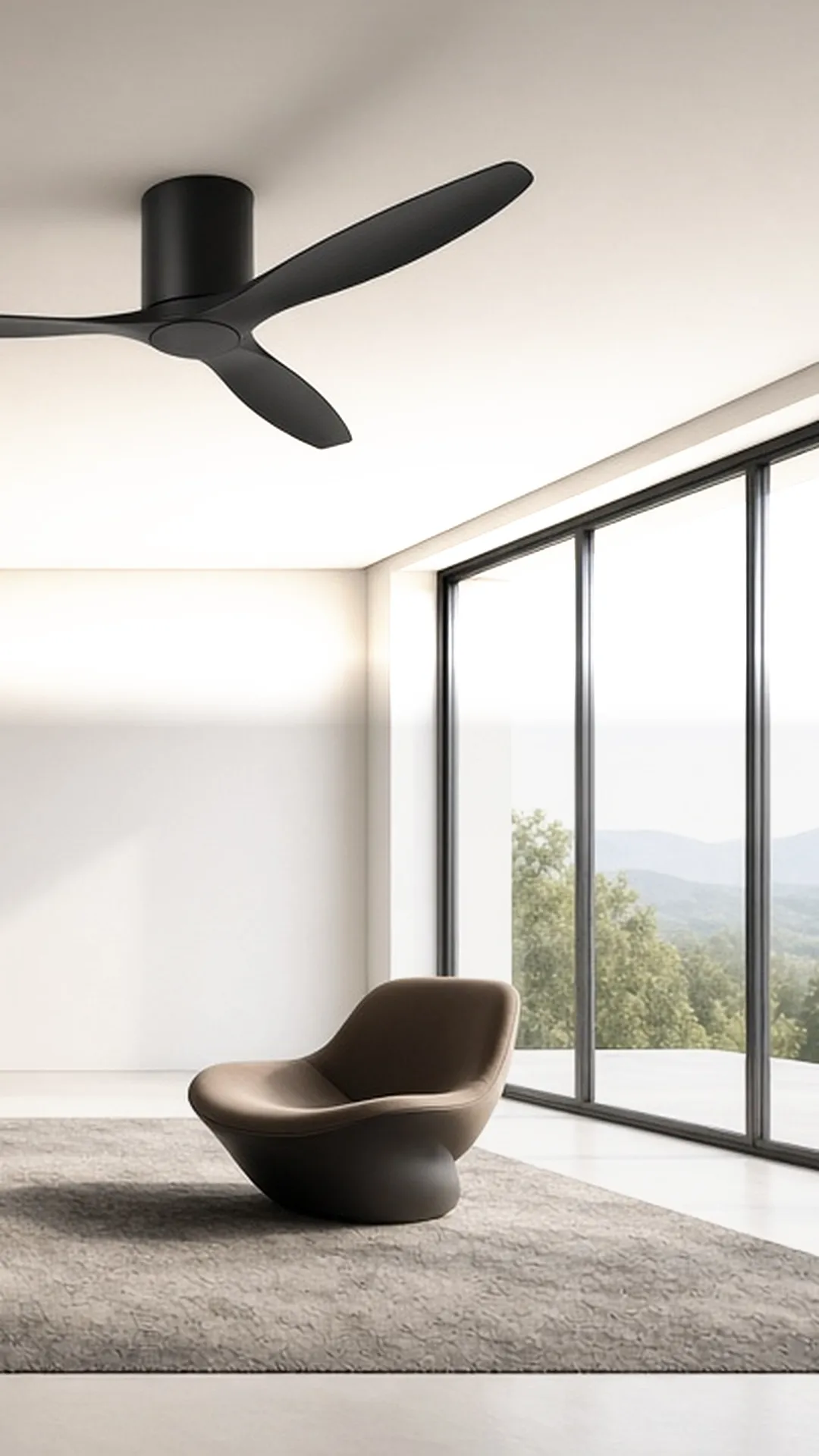
Flush and hugger mounts
ENERGY STAR says flush mounts anchor the fan directly against the ceiling, and that many makers sell "hugger" or "low profile" fans designed for this.
When they come up
ENERGY STAR says hugger fans suit rooms with ceilings under 8 feet, or rooms where a fan with a light would hang too low.
The trade-off
ENERGY STAR says hugger fans will not move as much air as a regular fan, because the blades are closer to the ceiling.
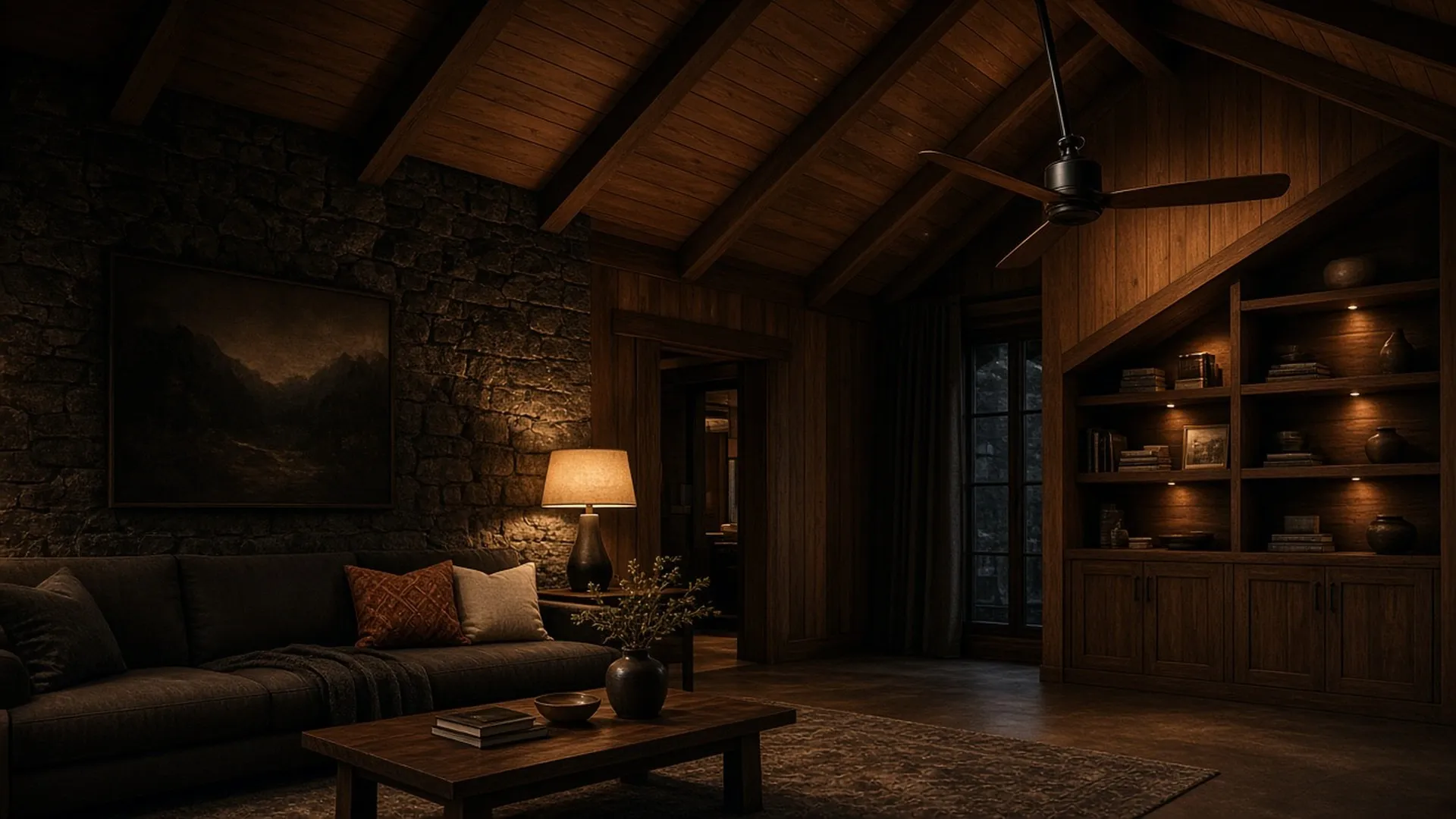
Sloped and vaulted ceilings
ENERGY STAR says sloped mounts are used for angled or vaulted ceilings. Whether a fan suits your slope is in its manual. Hire a licensed electrician.
Sources: ENERGY STAR, Ceiling Fan Basics.
FAQ
General information only. Ceiling fans and light fixtures are electrical equipment. Hire a licensed electrician for any installation, wiring, electrical box, switch, or light kit work, and follow the fan maker's manual and your local electrical code. Before cleaning, changing a bulb, or checking a fan, turn it off and let the blades stop and the bulbs cool; turn off power at the circuit breaker before any work near the fan's wiring. Use a stable ladder, and if you are not comfortable working overhead, call a pro. Never use a bulb above the maximum wattage marked on the fixture. If a fan or light flickers, buzzes, smells hot, or trips a breaker, stop using it and call a licensed electrician.
Next: height and downrods
Blade height and mounts.
