
LED vs incandescent bulbs
Same light, far fewer watts.
Disclosure: We may earn a commission if you buy through links on this page. It does not change what we recommend. Affiliate Disclosure
Same light, less power
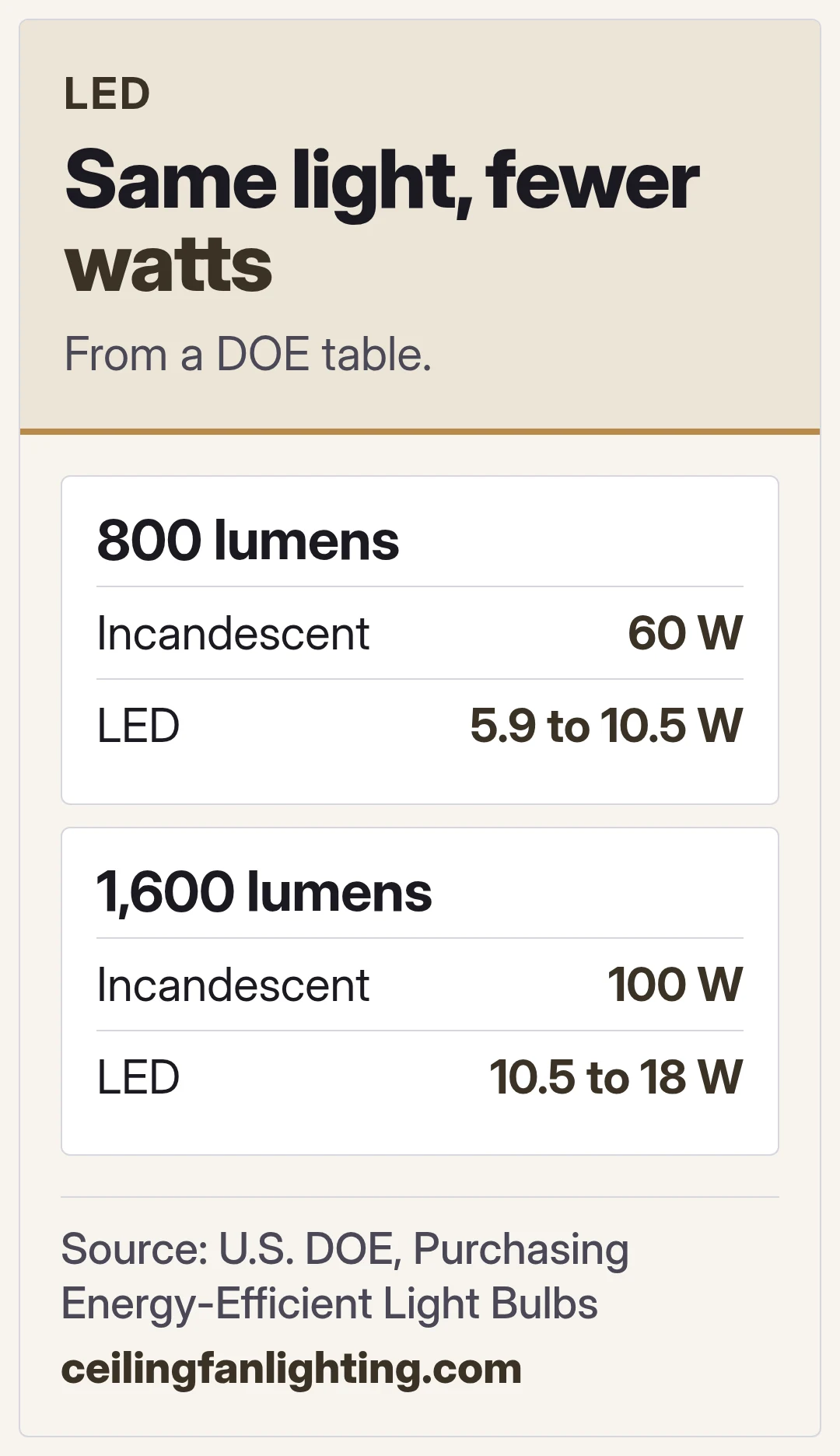
A DOE table compares bulbs by light output. For 800 lumens it lists 60 watts for incandescent and 5.9 to 10.5 watts for LED. For 1,600 lumens, 100 watts and 10.5 to 18 watts.
Why lumens matter
The DOE says lumens measure the total visible light a bulb gives off, while watts measure power input.
Dimmable LEDs in a fan
ENERGY STAR says to use dimmer switches compatible with LED lights for dimmable lighting in a ceiling fan, and to check that the packaging says the lighting is dimmable.
Dimmers and fan motors
ENERGY STAR says using a conventional dimmer switch to run the fan could make the motor hum. Ceiling fan controls: chains, remotes, and walls
FAQ
General information only. Ceiling fans and light fixtures are electrical equipment. Hire a licensed electrician for any installation, wiring, electrical box, switch, or light kit work, and follow the fan maker's manual and your local electrical code. Before cleaning, changing a bulb, or checking a fan, turn it off and let the blades stop and the bulbs cool; turn off power at the circuit breaker before any work near the fan's wiring. Use a stable ladder, and if you are not comfortable working overhead, call a pro. Never use a bulb above the maximum wattage marked on the fixture. If a fan or light flickers, buzzes, smells hot, or trips a breaker, stop using it and call a licensed electrician.


Next: lumens vs watts
Brightness, not power.
