
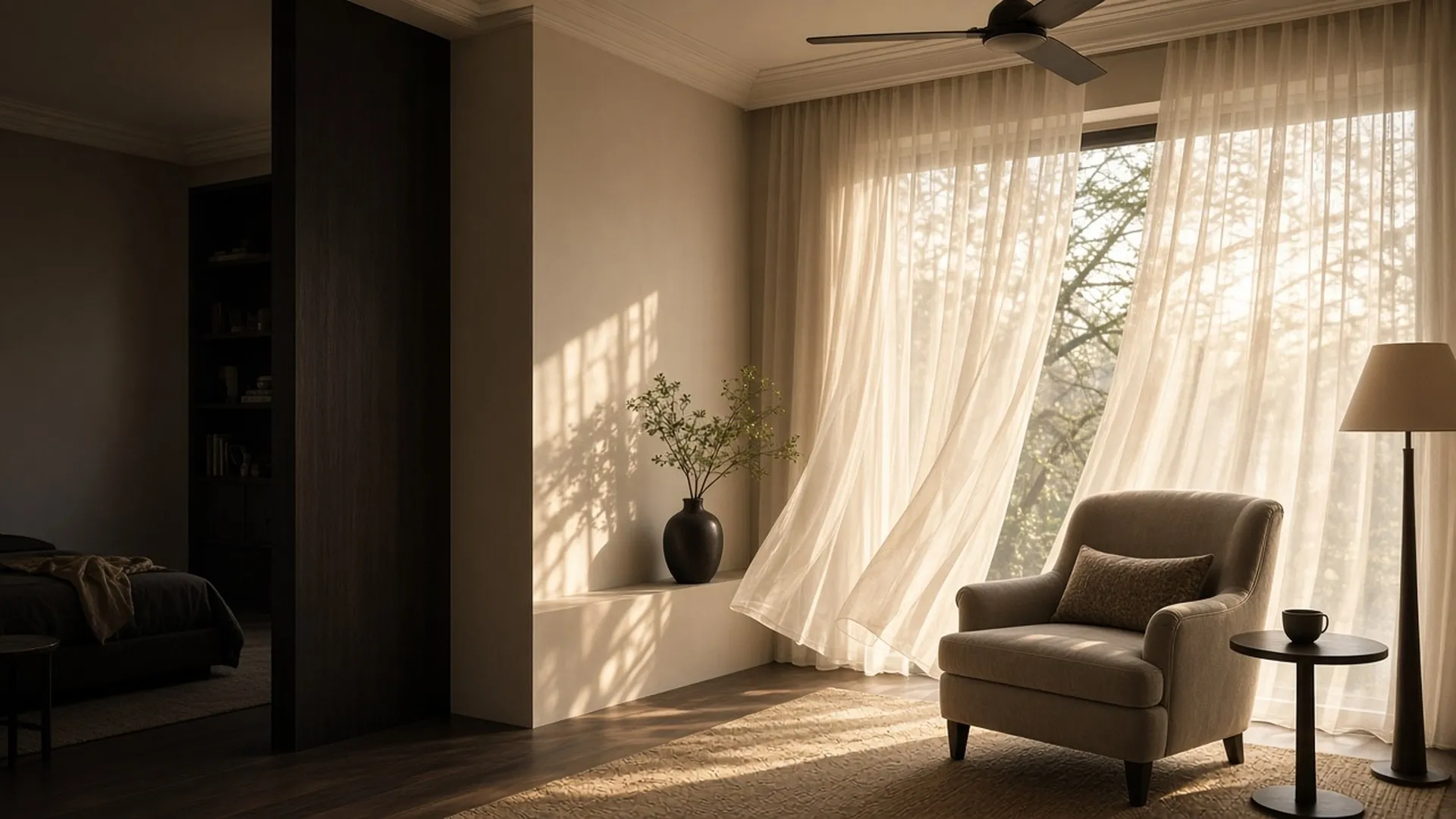
Do ceiling fans save energy?
They cool people, not rooms. Here is what that means.
Disclosure: We may earn a commission if you buy through links on this page. It does not change what we recommend. Affiliate Disclosure
Wind chill, not cooler air
The DOE says ceiling fans cool by creating a wind chill effect. Fans cool people, not rooms, so turn them off when you leave.
The thermostat
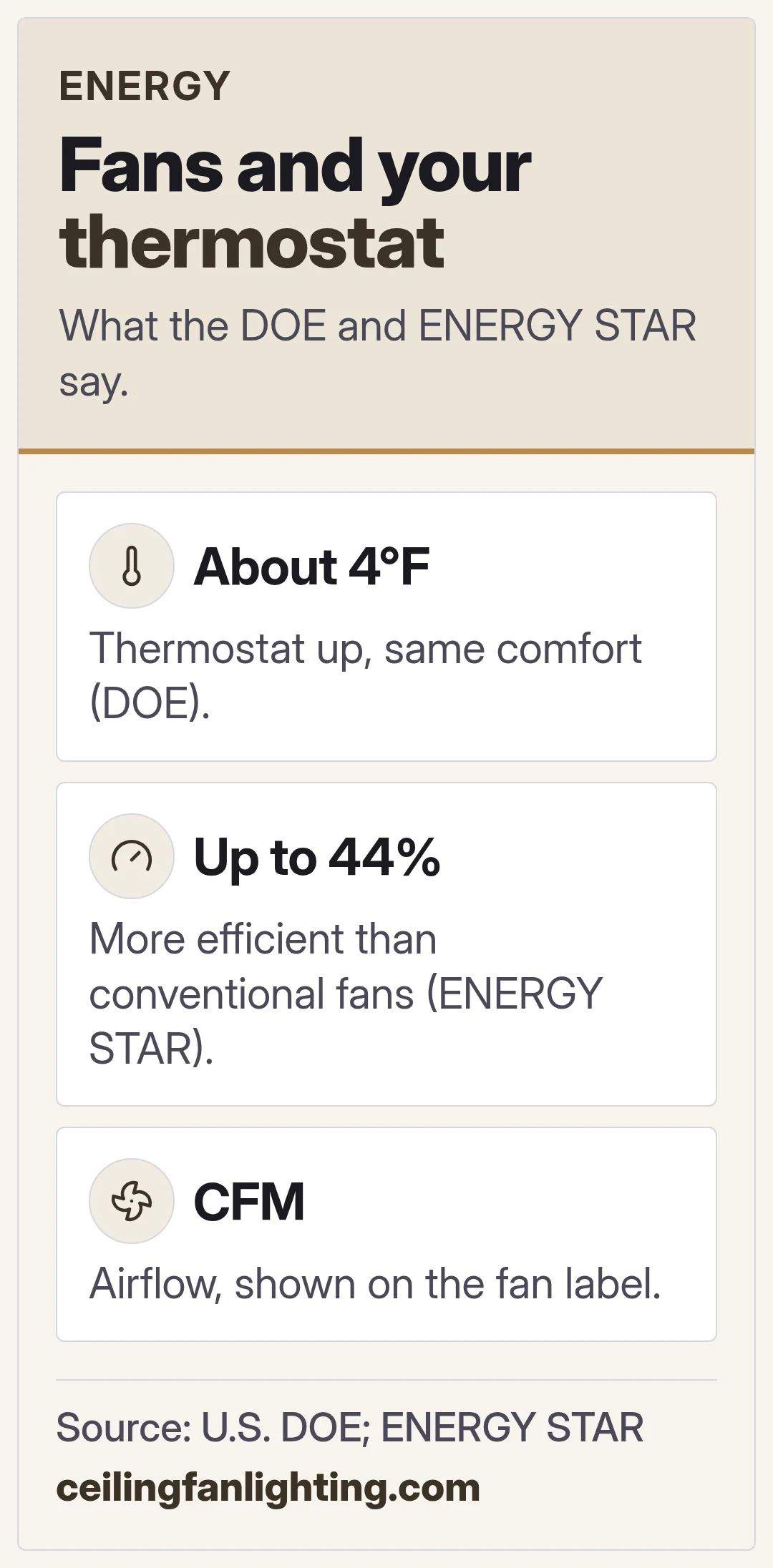
The DOE says using a ceiling fan lets you turn up the thermostat about 4°F without any loss in comfort.
The ENERGY STAR label
ENERGY STAR says certified ceiling fans are up to 44% more efficient than conventional fans, and are independently certified.
Airflow on the label
The ENERGY STAR fact sheet shows airflow in cubic feet per minute (CFM) on the fan label, and says the higher the airflow, the more air the fan will move. The label also shows airflow efficiency, in CFM per watt.
Federal standards
The DOE says it has had authority to regulate ceiling fan energy efficiency since 2005.
FAQ
General information only. Ceiling fans and light fixtures are electrical equipment. Hire a licensed electrician for any installation, wiring, electrical box, switch, or light kit work, and follow the fan maker's manual and your local electrical code. Before cleaning, changing a bulb, or checking a fan, turn it off and let the blades stop and the bulbs cool; turn off power at the circuit breaker before any work near the fan's wiring. Use a stable ladder, and if you are not comfortable working overhead, call a pro. Never use a bulb above the maximum wattage marked on the fixture. If a fan or light flickers, buzzes, smells hot, or trips a breaker, stop using it and call a licensed electrician.
Next: fan direction by season
Summer and winter settings.
