
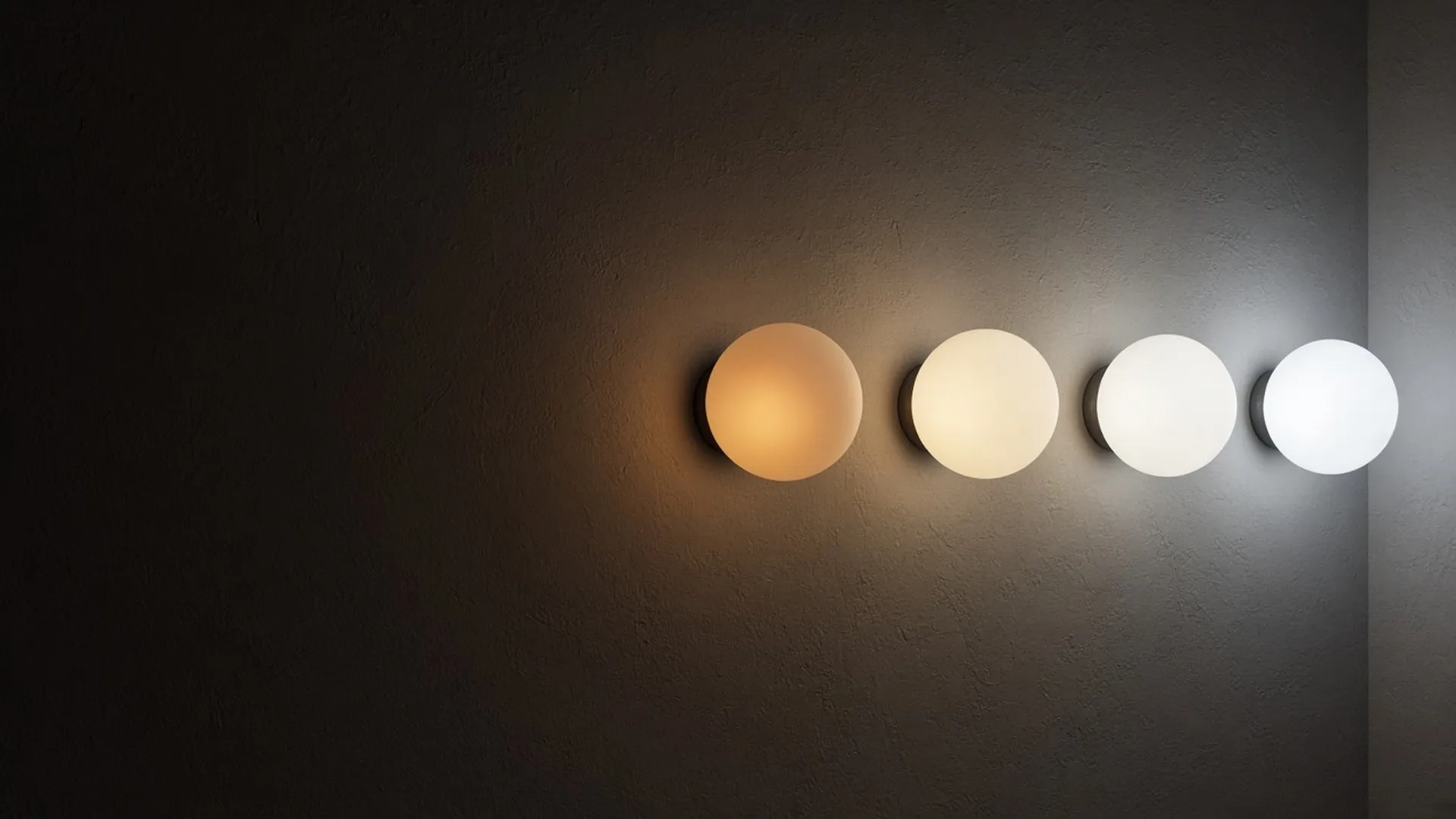
Color temperature, explained
Warm or cool light, measured in kelvin.
Disclosure: We may earn a commission if you buy through links on this page. It does not change what we recommend. Affiliate Disclosure
The kelvin scale
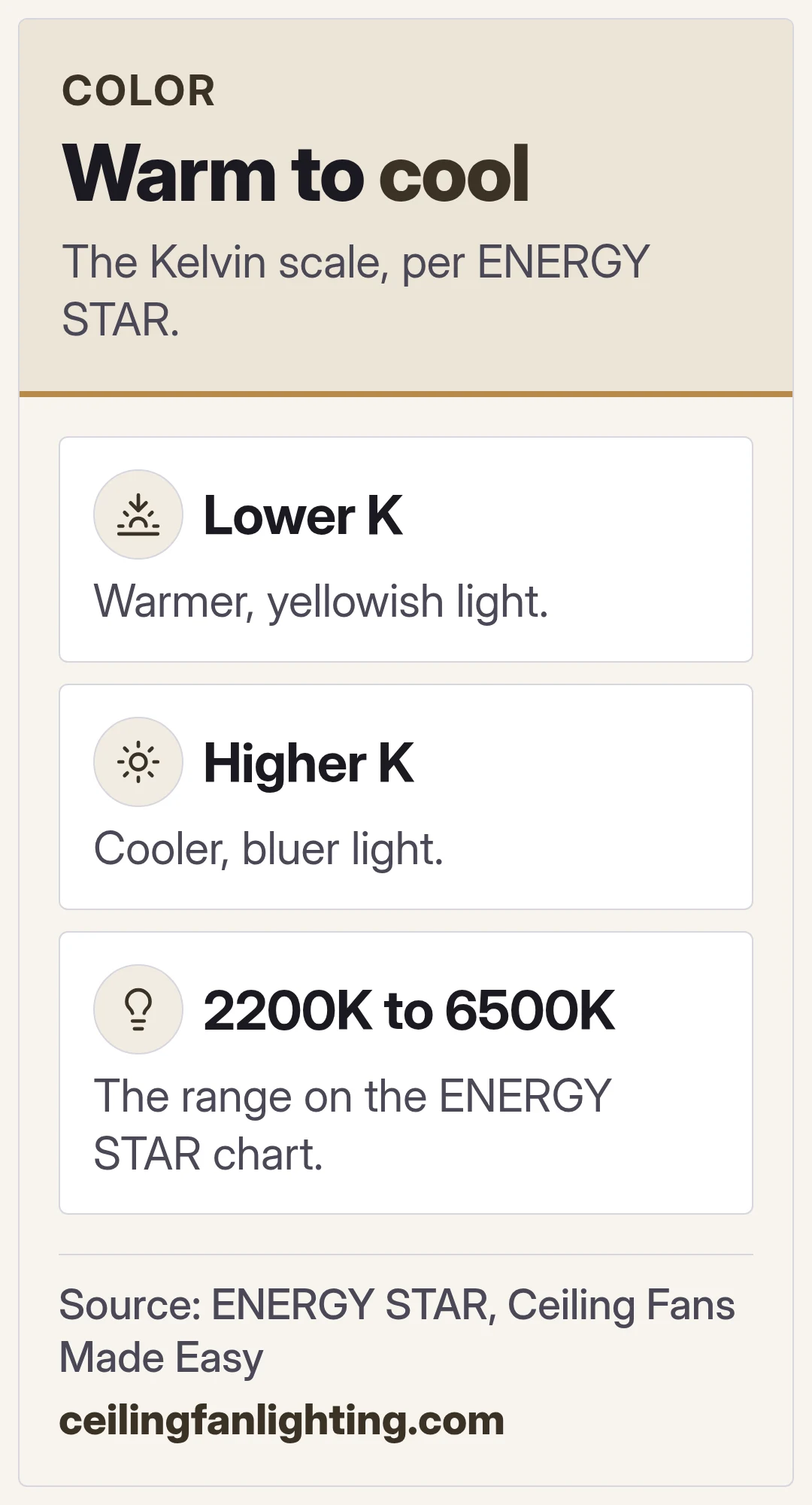
ENERGY STAR says light color is shown as a temperature on the Kelvin scale (K). Lower K means warmer, yellowish light. Higher K means cooler, bluer light.
The ENERGY STAR chart
The ENERGY STAR chart runs from 2200K to 6500K. At the warm end it describes amber light, a warm sunset, candle-like dimmed ambiance. Soft white and warm white are traditional incandescent light. Neutral and cool white are good for kitchens and work spaces. Daylight, think blue sky at noon, is good for reading.
2700K vs 3000K
Both sit on the warm side of the chart. Because higher K is cooler, 3000K looks a little cooler than 2700K.
On the package
The DOE says the Lighting Facts label shows light appearance, so you can compare before you buy.
FAQ
General information only. Ceiling fans and light fixtures are electrical equipment. Hire a licensed electrician for any installation, wiring, electrical box, switch, or light kit work, and follow the fan maker's manual and your local electrical code. Before cleaning, changing a bulb, or checking a fan, turn it off and let the blades stop and the bulbs cool; turn off power at the circuit breaker before any work near the fan's wiring. Use a stable ladder, and if you are not comfortable working overhead, call a pro. Never use a bulb above the maximum wattage marked on the fixture. If a fan or light flickers, buzzes, smells hot, or trips a breaker, stop using it and call a licensed electrician.

Next: lumens vs watts
Brightness, not power.
